Corrugated cardboard sustainability explained for packaging buyers
a[data-rs-seo-link]{text-decoration:underline!important;color:#1a56db!important;cursor:pointer!important;}a[data-rs-seo-link]{text-decoration:underline!important;color:#1a56db!important;cursor:pointer!important;}
Corrugated cardboard sustainability is not a simple yes-or-no claim. Corrugated packaging has clear circularity strengths: it is fiber-based, widely collected in many markets, commonly made with recycled content, and supported by established recycling infrastructure. Public data from the U.S. EPA, AF&PA, FEFCO, and Corrugated Packaging Alliance life cycle studies helps explain why it is often preferred over harder-to-recycle formats.
That does not make every cardboard box sustainable. Oversized cartons, excessive void fill, difficult coatings, wet or contaminated fiber, weak local collection, and vague marketing claims can all reduce the real benefit. For packaging buyers, the useful question is not whether corrugated is sustainable in theory. It is whether a specific box is designed, sourced, used, and recovered in a way that supports circular packaging.
What corrugated cardboard sustainability really means
Corrugated cardboard sustainability should be judged across the full life cycle, not only at the recycling bin. The U.S. EPA describes sustainable materials management as a life-cycle approach to using and reusing materials more productively, from raw material acquisition through manufacturing, use, reuse, and waste management. Applied to corrugated packaging, that means buyers should examine fiber sourcing, mill energy, box design, transport efficiency, product protection, consumer disposal behavior, and actual recovery systems.
This broader view matters because packaging still has to do its primary job. A very light box that fails in transit can create more waste if the product must be replaced. A heavily coated box may protect against moisture but reduce recyclability if the coating is not compatible with paper recycling. A reusable plastic container may be attractive in a closed loop, yet it can perform differently when return distance, washing, loss rates, and reverse logistics are included. Sustainability is therefore a systems question, not a material label.
For more packaging sustainability perspectives, see HubbleRobo’s Sustainability section.
The evidence behind corrugated cardboard’s circularity advantage
Several public datasets support the view that corrugated cardboard is one of the more mature circular packaging materials. The figures below should be read with care because they come from different regions, years, and methodologies. Taken together, they explain why corrugated packaging has a strong sustainability reputation.
| Evidence point | What it shows | Why it matters |
|---|---|---|
| U.S. EPA 2018 municipal solid waste data | Corrugated boxes were reported as the largest single product category in U.S. municipal solid waste generation, with 33.3 million tons generated and 32.1 million tons recycled. | The material exists at large scale and has historically had a high recovery pathway in the U.S. data series. |
| AF&PA 2025 recycling update | The U.S. cardboard recycling rate was reported at 70% to 75% in 2025, and nearly half of recovered paper went into containerboard, the material used for cardboard boxes. | Recovered fiber has a direct end market, which is essential for recycling to function economically. |
| FEFCO 2024 European industry statistics | FEFCO reports that 88% of corrugated packaging in Europe is derived from recycled content and that the sector produces about 49 billion square meters of corrugated board annually. | European data shows high recycled-content use in a large packaging category, although regional collection systems differ. |
| Corrugated Packaging Alliance 2020 U.S. LCA | The 2023 release of the 2020 LCA reported a 50% per-unit reduction in greenhouse gas emissions between 2006 and 2020. | Life cycle assessment adds context beyond recyclability by considering energy, production, and end-of-life impacts. |
For buyers, the main point is that recycling rate, recycled content, and LCA improvement measure different things. A box can include recycled content but still be poorly sized. A box can be technically recyclable but not collected in a specific market. An industry-average life cycle study can show improvement while still leaving room for project-level optimization. Strong sustainability decisions use all three lenses.
Where corrugated performs well
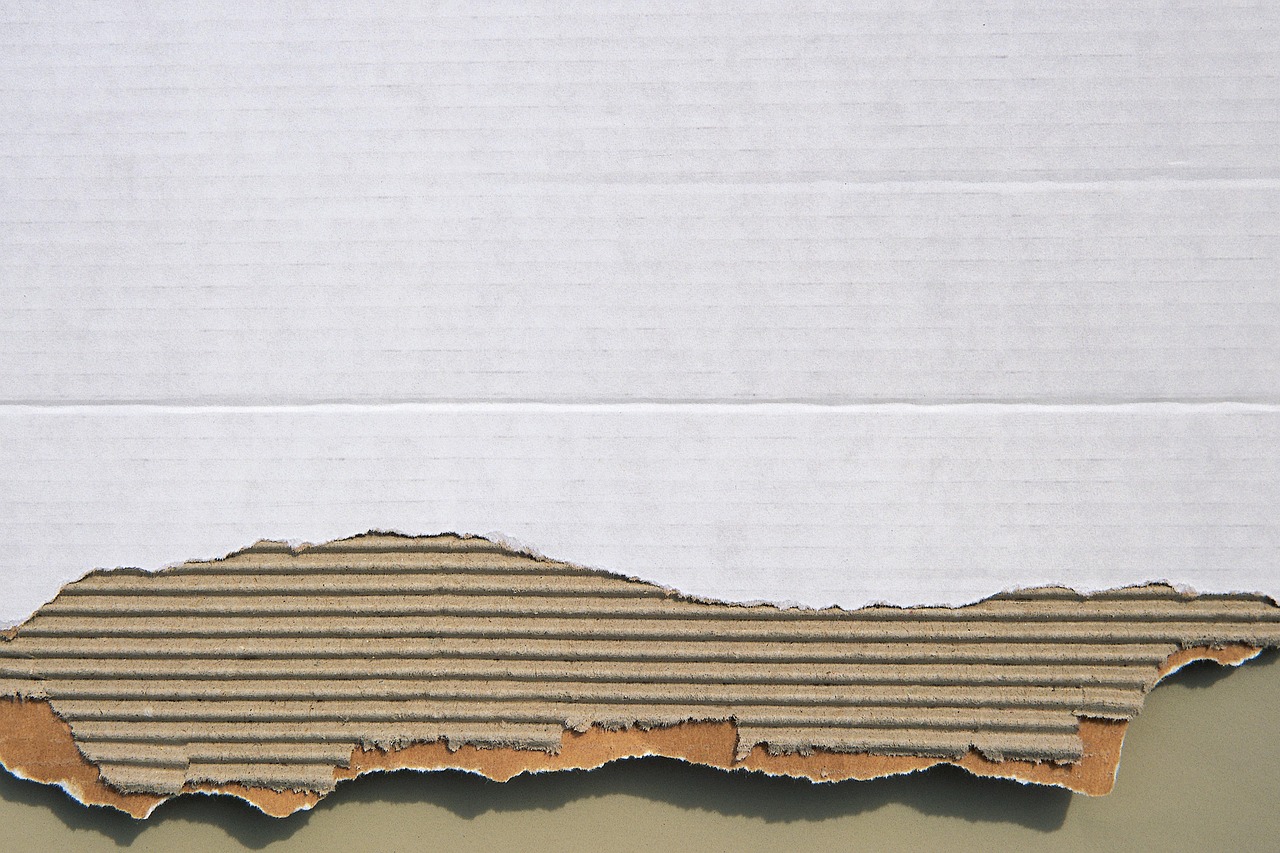
Corrugated packaging performs especially well when a shipping or retail system needs a material that is strong, printable, renewable in origin, and recoverable after use. Its fluted structure creates stiffness without using a solid mass of fiber, which helps explain why it is widely used for transport packaging. In many supply chains, old corrugated containers are collected from warehouses, stores, distribution centers, and curbside programs, then returned to mills as recovered fiber.
Corrugated also works well with source reduction. A box can often be redesigned by changing board grade, flute profile, dimensions, partitions, or die-cut structure. These adjustments may reduce fiber use while preserving compression strength, stacking performance, or product protection. Right-sizing can also reduce empty space, lower the need for void fill, and improve pallet or parcel density.
Another important benefit is product protection. Packaging sustainability is not only about what happens to the package after use; it is also about whether the package prevents damage, spoilage, leakage, or rejected shipments. For produce, consumer goods, electronics, and e-commerce parcels, the environmental cost of a damaged product can be higher than the cost of the box itself. The strongest sustainability case occurs when corrugated packaging uses enough material to protect the product, but not so much that it becomes avoidable waste.
Where corrugated sustainability claims can become weak
The main limitation is that “recyclable” does not always mean “recycled.” Actual recovery depends on collection access, sorting quality, bale markets, and mill acceptance. A clean shipping carton collected from a warehouse is very different from a wet, food-contaminated, wax-coated, or laminated package placed in a mixed residential stream.
Coatings and non-fiber components need close review. Paper-based packaging may require barriers for moisture, grease, cold chain performance, or product visibility. Some coatings are compatible with recycling when used within accepted thresholds; others can create problems. Public recyclability assessment guidance in the U.K., for example, flags two-sided wax coatings, certain polymer dispersion coatings, and some foil laminations as problematic unless testing confirms they can be reprocessed without disrupting paper recycling. The practical lesson is not to avoid every coating, but to require evidence for the specific coating system.
Overpackaging is another common weakness. Corrugated boxes are easier to recycle than many formats, but that does not justify unnecessary layers, oversized cartons, or decorative structures that add fiber without improving protection or merchandising. The waste hierarchy still puts prevention and reduction before recycling. A recyclable box that never needed to be that large is still a missed sustainability opportunity.
Design choices that improve corrugated cardboard sustainability
Packaging teams can improve corrugated performance through design decisions that are practical, measurable, and easier to defend than broad “eco-friendly” language. See also: Box Design.
- Right-size the box. Reduce unused internal volume while maintaining product protection and fulfillment efficiency.
- Match board grade to the risk. Avoid both under-specification that causes damage and over-specification that adds unnecessary fiber.
- Keep the structure paper-forward. Minimize non-fiber windows, plastic laminates, heavy inks, and hard-to-separate components when they are not required.
- Use coatings only when the function is clear. Moisture, grease, or cold-chain needs may justify coatings, but recyclability testing should support the choice.
- Design for easy emptying and flattening. Boxes that are simple to break down are more likely to enter the correct recovery stream.
- Specify recycled content carefully. Recycled fiber can reduce demand for virgin material, but claims should state the percentage and whether it is pre-consumer or post-consumer when relevant.
- Consider logistics density. A smaller, stronger, stackable box can reduce transport inefficiency and warehouse handling impacts.
These choices are usually more useful than a generic material switch. A poorly designed paper package can underperform, while a well-designed corrugated system can reduce fiber, protect products, and move cleanly into recycling.
Policy and claims are raising the bar
As of September 17, 2026, packaging policy is pushing companies toward more evidence-based sustainability decisions. In the European Union, new packaging and packaging waste rules adopted in December 2024 started to apply on August 12, 2026. The rules aim to reduce packaging waste, promote a circular economy, harmonize packaging requirements, keep recycling targets for major materials, and require all packaging to be recyclable by 2030. For paper and cardboard packaging, the EU’s recycling targets remain 75% by 2025 and 85% by 2030.
In the United States, policy is more fragmented. California’s SB 54 created an extended producer responsibility program for packaging and single-use plastic food service ware, and CalRecycle reported that permanent regulations were approved and became effective on May 1, 2026. Even when a company is not directly covered by a specific rule, the direction is clear: packaging data, material categories, recyclability determinations, and producer obligations are becoming more important.
Marketing claims face similar scrutiny. The Federal Trade Commission’s Green Guides caution against broad, unqualified environmental benefit claims such as “green” or “eco-friendly.” They also say recyclable claims should be qualified when appropriate recycling facilities are not available to at least 60% of consumers or communities where a product is sold. For corrugated packaging, the most defensible claims are specific: recyclable where facilities exist, made with a stated percentage of recycled content, right-sized compared with a previous design, or designed to reduce material use by a measured amount.
A practical framework for packaging buyers
A buyer evaluating corrugated cardboard sustainability can use a simple sequence before approving a specification or claim.
- Define the function. What product risk must the package manage: compression, drop, moisture, temperature, contamination, theft, or shelf display?
- Measure the material. Record board grade, basis weight, recycled content, coating type, inks, adhesives, and non-paper components.
- Test performance. Confirm that lighter or redesigned packaging still prevents damage in the real distribution environment.
- Check recoverability. Ask whether the package is accepted in the target market’s paper recycling stream and whether coatings or attachments need testing.
- Compare alternatives fairly. Include product loss, transport distance, reuse loops, washing, return rates, and end-of-life assumptions.
- Control the claim. Use precise language that matches the evidence and the geography where the package is sold.
This framework avoids two common mistakes in sustainability communication: assuming corrugated is always the lowest-impact choice, or dismissing it because it is single-use. The more practical conclusion is that corrugated can be a strong circular packaging option when it is designed for the job, recovered at scale, and described honestly.
Frequently asked questions
Is corrugated cardboard sustainable?
Corrugated cardboard can be sustainable when it is right-sized, sourced from responsibly managed fiber, manufactured efficiently, and recovered through paper recycling. Its sustainability case is strongest where clean collection systems and end markets for recovered fiber are well established.
Is recycled content the same as recyclability?
No. Recycled content describes what the package is made from. Recyclability describes whether the package can be collected, sorted, and reprocessed into new material in a real recycling system. A package can have recycled content but still need design changes to improve recyclability.
Do coatings make corrugated cardboard non-recyclable?
Not always. Some coatings are compatible with paper recycling, while others can interfere with pulping, screening, or fiber recovery. Barrier coatings, waxes, films, and foil laminations should be evaluated against recognized recyclability guidance or tested with qualified labs.
Is corrugated better than reusable plastic packaging?
There is no universal answer. Corrugated may perform well where one-way shipping, high recycling rates, and efficient box design are important. Reusable plastic systems may perform well in closed loops with high return rates, short transport distances, and durable container use. A fair comparison requires life cycle assumptions, not material preference alone.
What is the most practical way to improve corrugated packaging sustainability?
Start with right-sizing and material reduction without increasing product damage. Then review recycled content, coating compatibility, ease of flattening, and the accuracy of sustainability claims. These steps are measurable and easier to defend than broad environmental language.