How to choose shipping supplies that protect products and control costs
a[data-rs-seo-link]{text-decoration:underline!important;color:#1a56db!important;cursor:pointer!important;}a[data-rs-seo-link]{text-decoration:underline!important;color:#1a56db!important;cursor:pointer!important;}
What matters most when choosing shipping supplies
Shipping supplies are part of the product protection system, not just warehouse consumables. They influence whether an order arrives intact, whether freight costs remain predictable, and whether packaging claims can be supported when customers, retailers, or regulators ask questions.
The most practical way to choose them is to start with four factors: the product’s fragility, the distribution environment, the package’s billable size, and the realistic end-of-life path for the material. A strong box with the wrong void fill can still fail. A lightweight mailer can lower material and freight cost, but it may expose corners, liquids, or electronics to damage. A package described as recyclable or compostable also needs evidence behind the claim, not just good intent.
This guide explains how to evaluate common shipping supplies and build a packaging mix that balances protection, cost, and compliance. For related topics, visit the Product Protection section.
The main categories of shipping supplies
Most shipping operations use a mix of outer packaging, internal cushioning, sealing materials, labels, and handling aids. The right combination depends less on any single material and more on how the finished package performs under compression, drops, vibration, temperature changes, and normal human handling.
Boxes, mailers, and rigid outer packaging
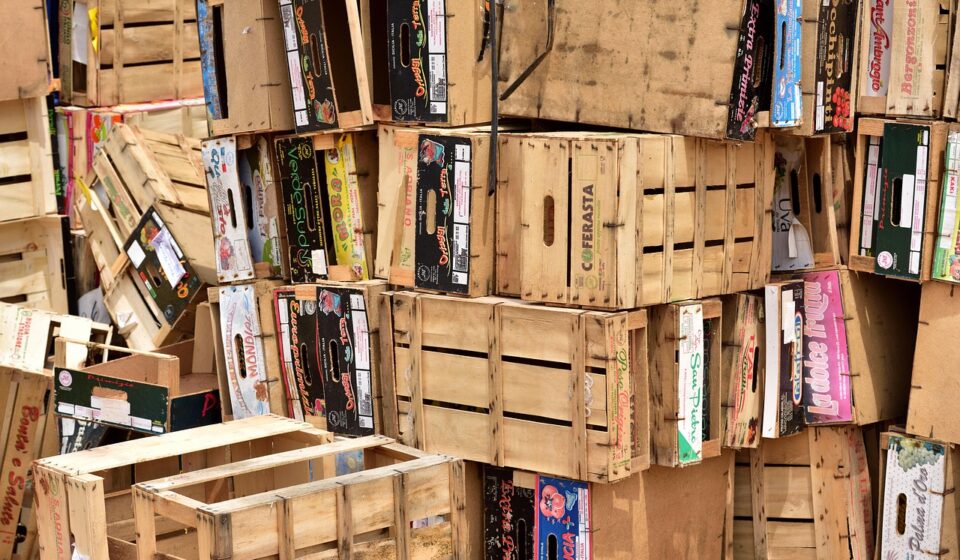
Corrugated boxes remain the default for many parcel and less-than-truckload shipments because they provide stack strength, edge protection, and a printable surface for barcodes and handling marks. Single-wall boxes are often suitable for lighter goods. Double-wall or reinforced formats may be needed for dense, fragile, or high-value products.
Rigid mailers can protect flat goods such as documents, books, and prints. Padded and poly mailers are often used for apparel and soft goods that do not require strong corner protection.
The outer package should match the product’s real risk. A soft T-shirt may not need a corrugated carton, but a ceramic mug should not rely on a thin mailer. Items with sharp edges, liquids, glass, or retail packaging that must stay visually clean usually need more structure than low-risk products.
Cushioning and void fill
Cushioning absorbs shock. Void fill mainly prevents movement. The two functions are related, but they are not the same. Bubble wrap, molded pulp, foam inserts, paper pads, air pillows, and engineered corner protectors can reduce impact forces when they are chosen correctly. Kraft paper, crinkle paper, and air pillows can fill empty space, but they may not protect heavy or fragile items unless they are part of a tested pack design.
A common mistake is using extra void fill to compensate for an oversized box. That can increase material use and dimensional weight without improving protection. In many cases, a smaller box with targeted cushioning performs better than a large box packed with loose material.
Tape, labels, and closure materials
Sealing materials are often treated as minor supplies, but they can determine whether a package survives sorting and delivery. Pressure-sensitive carton-sealing tape, water-activated tape, strapping, stretch film, and tamper-evident labels all serve different purposes. A heavy box needs a closure pattern and tape grade that match its weight and surface conditions. Cold environments, dusty recycled board, and high humidity can all reduce adhesion.
Labels also affect performance. Poor label placement can create scanning delays. A label placed across a seam or curved surface can peel, wrinkle, or distort. For plastic mailers that enter film recycling streams, labels and adhesives may affect recyclability depending on the program’s requirements.
Build the package around product risk, not habit
A useful way to select shipping supplies is to start with the likely failure mode. Before choosing a material, ask what is most likely to go wrong. Could the product crack, leak, scratch, bend, shift, overheat, absorb moisture, or be crushed? Each risk points to a different packaging response.
| Product risk | Relevant shipping supplies | What to watch |
|---|---|---|
| Fragile glass, ceramic, or electronics | Corrugated carton, molded inserts, bubble wrap, foam, corner protection | Prevent product movement and protect corners, not only broad surfaces |
| Apparel and soft goods | Poly mailer, paper mailer, tissue, inner bag, return label | Avoid unnecessary box volume unless presentation or returns require it |
| Liquids and gels | Leak-resistant inner bag, absorbent material, strong carton, pressure-sensitive closure | Plan for cap failure, temperature changes, and orientation changes |
| Books, prints, and documents | Rigid mailer, stay-flat mailer, edge protection, moisture barrier | Prevent bending and corner dents |
| Heavy or dense items | Double-wall corrugated, reinforced tape, strapping, blocking and bracing | Check burst strength, edge crush, and bottom-seam failure risk |
| Moisture-sensitive goods | Barrier bag, desiccant, sealed carton, water-resistant label | Do not rely on the outer carton alone for moisture protection |
This risk-first approach also helps reduce overpacking. Overpacking may feel safer, but it can add cost, increase waste, and still fail if it does not address the actual stress the package will face.
Why dimensional weight changes the economics of packaging
For parcel shipments, package size can matter as much as actual weight. Major carriers use dimensional weight pricing for packages that are large relative to their weight. FedEx describes dimensional weight as length multiplied by width multiplied by height in inches, divided by 139 for U.S., Puerto Rico, and international shipments. UPS states that its divisor varies by rate type, including 139 for Daily Rates and 166 for Retail Rates. Carrier formulas and rate rules can change, so shippers should always check the current service guide before making pricing decisions.
The implication is straightforward: unused cubic space can become a recurring cost. A lightweight product shipped in a box twice as large as necessary may be billed at a higher weight because it consumes vehicle and aircraft capacity. This is why right-sizing cartons, using mailers where appropriate, and reducing unnecessary void space often create savings beyond the purchase price of the packaging material.
Dimensional weight should not push every shipper toward the smallest possible package. Too little protective space can increase damage, returns, replacements, and customer service costs. The goal is the smallest tested package that still protects the product through the expected distribution channel.
Use testing standards as decision tools
Package testing is not only for large manufacturers. Even small brands can use standard test concepts to make better packaging decisions. The International Safe Transit Association’s ISTA 3A procedure is designed for individual packaged products shipped through parcel delivery systems and covers standard, small, flat, and elongated package types up to 150 pounds. ISTA also publishes procedures aimed at e-commerce fulfillment environments. ASTM D4169 is a widely referenced practice for performance testing of shipping containers and systems, using a sequence of hazards based on the distribution environment. See also: Box Design.
These standards do not guarantee that every package will arrive undamaged in every real shipment. They create repeatable ways to compare designs, identify weak points, and document why one package is safer than another. For high-value, fragile, or frequently returned products, a simple test plan is often more useful than waiting for complaints after launch.
A practical testing checklist
- Test the complete packed unit, not only the box or the product by itself.
- Use the same tape, inserts, labels, and fill planned for production shipments.
- Check for product damage, package deformation, seal failure, label loss, and movement inside the box.
- Repeat tests after changing box size, board grade, insert design, or material supplier.
- Record photos, dimensions, weights, and pass-fail criteria so results can be compared later.
Sustainability claims need evidence
Packaging waste is receiving more attention from regulators, retailers, and consumers. The U.S. Environmental Protection Agency’s most recent national municipal solid waste data set for containers and packaging is from 2018. In that data, containers and packaging accounted for 82.2 million tons of generation, or 28.1 percent of total municipal solid waste generation. The same EPA data reported a 96.5 percent recycling rate for corrugated boxes. Those figures provide useful context, but they should not be treated as proof that every individual package will be recycled.
Recyclability depends on material type, coatings, adhesives, labels, contamination, local collection rules, and whether end markets exist. A plain corrugated box has a different recycling profile from a laminated mailer, a plastic film pouch with a paper label, or a foam-lined insulated shipper.
The Federal Trade Commission’s Green Guides are also relevant when packaging is marketed with environmental claims. The guides say recyclable claims should be qualified when recycling facilities are not available to at least 60 percent of consumers or communities where the product is sold. They also say compostable claims require competent and reliable scientific evidence that the material will break down safely in a suitable composting environment in about the same time as comparable materials.
In practice, packaging teams should be specific. “Recyclable where facilities exist” may be more accurate than a broad recyclable claim for a material with limited collection. “Compostable in industrial facilities” is different from home compostable. “Made with recycled content” should identify the relevant percentage when that claim is used.
Packaging regulation is becoming part of supply planning
Extended producer responsibility laws are changing how companies think about packaging selection in the United States. Industry summaries and state agency materials show that several states, including California, Colorado, Maine, Maryland, Minnesota, Oregon, and Washington, have enacted packaging-related EPR laws. California’s SB 54 regulations took effect on May 1, 2026, according to CalRecycle. Oregon approved Circular Action Alliance as its producer responsibility organization on February 21, 2025, for the state’s 2025-2027 program plan.
For buyers of shipping supplies, the key point is not that every small shipment is automatically subject to the same obligation. Requirements vary by state, material, producer role, exemptions, sales thresholds, and reporting periods. The practical takeaway is to keep cleaner material records now: box weights, mailer types, recycled content, supplier specifications, and annual packaging volumes. Good records make future compliance reviews easier and help identify where material reduction is possible.
A simple framework for selecting shipping supplies
The best packaging decision is usually a structured tradeoff, not a single preference for paper, plastic, foam, or corrugated. Use this sequence before placing a recurring supply order.
- Define the product risk. Note fragility, leakage risk, weight, edges, moisture sensitivity, and presentation requirements.
- Map the shipping channel. Parcel, freight, marketplace fulfillment, cold chain, and returns each create different hazards.
- Right-size the outer package. Reduce empty space, but leave enough room for effective cushioning.
- Select cushioning for the actual hazard. Use impact absorption, blocking, bracing, or abrasion protection as needed.
- Check billable weight. Compare actual weight with dimensional weight before finalizing carton sizes.
- Verify closure and labeling. Match tape, adhesive, label stock, and placement to the package surface and environment.
- Review environmental claims. Confirm recyclability, compostability, and recycled-content statements before using them in marketing.
- Document and retest changes. Material substitutions can change performance even when the package looks similar.
This framework keeps shipping supplies connected to business outcomes: fewer damages, fewer unnecessary surcharges, clearer material claims, and better purchasing discipline.
Frequently asked questions
What shipping supplies should a small online store keep in stock?
Most small stores need a limited range of right-sized boxes or mailers, protective fill, carton-sealing tape, shipping labels, return materials, and a scale or dimensioning process. It is better to stock a few tested sizes than many random box sizes that create excess void space.
Are paper mailers always better than plastic mailers?
No. Paper mailers can be a good choice for certain flat or lightweight goods, especially when curbside recycling is available. Plastic mailers can be lighter and moisture resistant, but film recycling access and label contamination can be limiting factors. The better choice depends on product protection, local recovery systems, and the accuracy of any environmental claim.
How much cushioning is enough?
Enough cushioning prevents the product from contacting the outer package during expected drops, vibration, and compression. The amount depends on product weight, fragility, box strength, and distribution channel. Testing the packed unit is more reliable than following a fixed inch-based rule.
When should a shipper move from a mailer to a box?
Use a box when the product needs corner protection, crush resistance, leakage containment, presentation protection, or structured cushioning. Mailers are usually better for soft, flexible, or low-fragility goods that can tolerate bending and pressure.
What is the biggest avoidable mistake in buying shipping supplies?
The biggest mistake is buying supplies by unit price alone. A cheaper box, tape, or filler can cost more if it increases damage, labor time, dimensional weight, reshipments, or customer complaints. Total delivered cost is the better measure.