Hamburger box design for takeout burgers that travel well

a[data-rs-seo-link]{text-decoration:underline!important;color:#1a56db!important;cursor:pointer!important;}a[data-rs-seo-link]{text-decoration:underline!important;color:#1a56db!important;cursor:pointer!important;}
Why the hamburger box matters in foodservice packaging
A hamburger box is more than a paperboard shell around a burger. For quick-service restaurants, food trucks, stadium vendors, delivery kitchens, and frozen or prepared food counters, the box affects product quality, handling speed, grease control, perceived value, and waste claims. A sound design keeps the bun from collapsing, allows limited steam to escape, resists oil long enough for the service window, and gives staff a fast, repeatable packing motion. A weak design can make a carefully built burger look messy before the customer opens it.
The best hamburger box decisions start with the food, not the artwork. Burger diameter, stack height, sauce level, holding time, delivery distance, and disposal route should all shape the structure. For more packaging layout ideas across carton styles, visit the Box Design section.
Start with the burger, service model, and holding time
The right box for a classic single cheeseburger may not work for a double smash burger with dripping cheese, a tall premium burger with lettuce and tomato, or a saucy chicken sandwich. Before choosing board grade, coating, vent pattern, or print style, define the real use case.
Measure the food in its finished state
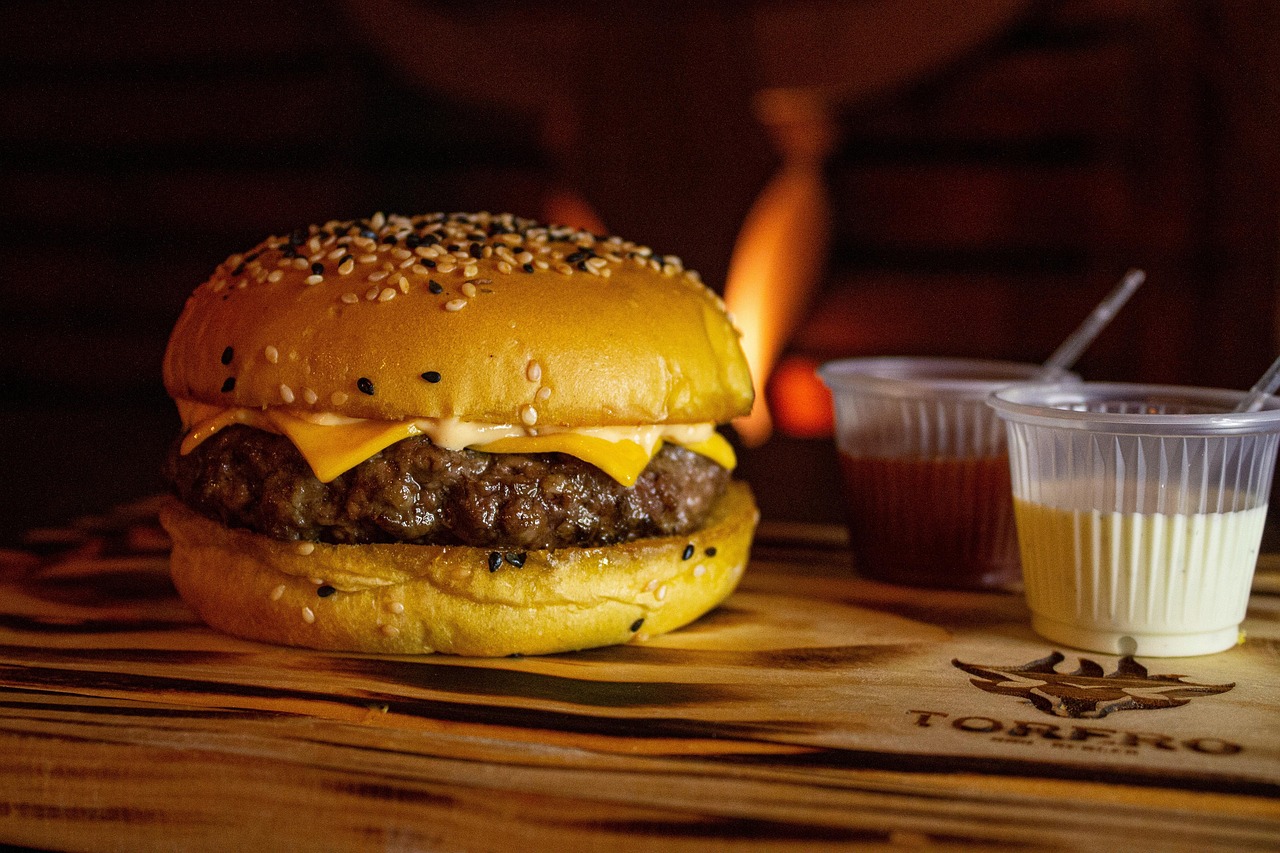
Designers should measure the burger after cooking and assembly, not only against the patty or bun specification. Heat, melted cheese, sauce, lettuce, pickles, and compression all change the clearance needed inside the box. A box that is too shallow presses the bun and pushes toppings sideways. A box that is too large lets the burger slide, which can smear sauces and damage presentation.
Useful measurements include bun diameter, maximum burger height, topping overhang, expected grease level, and the time between boxing and eating. If the burger is usually eaten within five minutes at the counter, the box can prioritize hand feel and presentation. If it travels for 20 to 40 minutes through delivery, the design must do more to control sliding, condensation, and stacking pressure.
| Use case | Main design risk | Helpful box features |
|---|---|---|
| Dine-in or counter pickup | Heat loss and messy handoff | Simple clamshell, easy opening, moderate grease resistance |
| Drive-through | Speed, stacking, and order accuracy | Fast-lock lid, clear print area, stable footprint |
| Third-party delivery | Steam buildup, sliding, crushed boxes | Vent control, stronger corners, snug internal fit |
| Premium burger menu | Loss of perceived value | Clean print, rigid board, interior presentation space |
| Large or double burgers | Compression and sauce leakage | Higher depth, reinforced lid, wider grease barrier zone |
Choose materials and coatings with food contact in mind
Most hamburger boxes use paperboard, corrugated micro-flute, molded fiber, or coated fiber structures. The choice usually comes down to rigidity, print quality, grease resistance, cost, storage space, and local disposal options. Paperboard folding cartons are common because they are lightweight, printable, and easy to form. Micro-flute formats add strength for heavier burgers or delivery stacking. Molded fiber can support a natural look, but it may limit detailed graphics and should be tested carefully for grease and moisture.
Food-contact suitability is not optional. In the United States, FDA guidance directs businesses to evaluate food-contact material components through relevant regulations, including 21 CFR parts covering indirect additives, paper and paperboard components, adhesives, coatings, and polymers. For buyers, that means requesting current food-contact documentation for the exact material, coating, ink system, and intended use. A general claim that a box is food grade is less useful than a declaration tied to the material construction and contact conditions.
Grease resistance deserves particular attention. The FDA announced on February 28, 2024 that grease-proofing substances containing certain PFAS were no longer being sold by manufacturers for food-contact use in the U.S. market. That announcement changed how many buyers discuss grease barriers, but it does not remove the need to verify supplier statements. Ask whether grease resistance comes from a PFAS-free treatment, a water-based coating, a dispersion barrier, a polymer coating, or a separate liner. Each option can affect recyclability, compostability, print behavior, heat response, and cost.
Control steam, heat, and grease without overpromising freshness
Burger packaging has to manage a trade-off. Customers want the burger to stay hot, but a fully sealed hot burger creates steam. That steam can soften buns, wilt lettuce, and weaken board or adhesive in longer delivery windows. Venting helps release moisture, but too much venting speeds heat loss. The practical target is not perfect freshness; it is a controlled compromise for the actual service window.
Use venting as a design tool
Small vents placed away from major grease paths can reduce condensation while maintaining reasonable heat. Corner vents, side slits, or lid micro-vents are often safer than large holes on top, especially when boxes are stacked. For saucy burgers, vents should not become leakage points. For delivery, vent placement should also account for whether the box sits inside a paper bag, plastic carrier, insulated pouch, or stacked order.
Remember that packaging is not temperature control
A hamburger box can slow heat loss, but it cannot replace proper hot holding, safe preparation, or time control. The FDA Food Code is commonly used as a model in U.S. retail food regulation and identifies 135°F, or 57°C, as a hot-holding reference point for time and temperature control foods. USDA food safety guidance also warns against leaving perishable foods in the 40°F to 140°F danger zone for extended periods. Packaging design should support safe operations, but it should never be used as proof that an unsafe holding process is acceptable.
From a design perspective, insulation should be treated as a quality feature, not a food safety guarantee. If a restaurant has long delivery distances, the answer may involve dispatch timing, bag handling, order sequencing, and menu design as well as the hamburger box itself.
Design structure for speed, protection, and opening experience
In a busy foodservice environment, a box that looks good but slows the packing line can create problems. Staff need to open, fill, close, and stack the box quickly with gloved or slightly greasy hands. Locking tabs should be intuitive, fold lines should be accurate, and the lid should close without pressing directly on the top bun.
Key structural details include corner strength, lid clearance, front-tab security, base stiffness, and internal footprint. Rounded or chamfered corners can improve hand feel and reduce snagging in bags. A broad, flat lid can support branding and stacking, but it may sag if the board is too light. A tight tab can protect the product in delivery, but if it is too tight, customers may tear the lid or shake the burger while opening it.
Box depth is one of the most underestimated variables. A tall burger needs vertical space, but extra height increases air volume and can allow more movement inside the box. Designers can address this with a deeper base, a slightly domed lid, or internal geometry that limits sliding. For premium burgers, the opening moment matters: the burger should sit centered, upright, and visible without the customer needing to rebuild it.
Plan graphics and branding around real handling conditions
A hamburger box offers a compact but useful branding surface. The top panel is the most visible area for a logo, menu line, limited-time offer, or color cue. Side panels can carry flavor identification, handling notes, recycling or disposal language, and order-coding marks. The artwork still has to tolerate grease, steam, stacking, and fast handling. See also: Buying Guides.
Simple graphics often work better than dense messages. High-contrast logos, limited color palettes, and clear product identifiers help staff and customers recognize the order quickly. If multiple burger types share the same base box, designers can add checkboxes, color bands, or short item codes. These features can reduce mistakes without requiring a different printed box for every menu item.
Inside printing can make the unboxing experience feel more considered, but it should be used carefully. Any ink, coating, or varnish near direct food contact must be evaluated for the intended use. If the interior is unprinted, the brand can still feel polished through clean dielines, neat folds, and a lid that opens smoothly.
Be careful with recyclable, compostable, and eco claims
Sustainability language is now part of packaging design, but it is also a compliance and trust issue. A plain fiber look does not automatically mean a hamburger box is recyclable or compostable. Coatings, food residue, local collection rules, and processing infrastructure all matter. EPA municipal solid waste data for 2018 shows high recycling rates for paper and paperboard packaging as a broad category, especially corrugated boxes, but that data should not be stretched to claim that every coated, greasy, or food-soiled burger box will be recycled.
In the United States, the FTC Green Guides say marketers should qualify recyclable claims when appropriate facilities are not available to at least 60 percent of consumers or communities where the product is sold. The same guidance also says compostable claims need competent and reliable scientific evidence and should be qualified if suitable composting options are not broadly available. In plain language, a box should not carry a broad environmental claim simply because the base material sounds natural.
For brands selling in or into Europe, the Packaging and Packaging Waste Regulation began applying in mid-2026 and pushes packaging toward clearer labeling, reduced unnecessary packaging, and recyclability requirements by 2030. That does not mean every hamburger box needs the same design in every market, but it does mean global packaging teams should document materials, coatings, empty space, sorting labels, and end-of-life claims more carefully.
A practical hamburger box selection checklist
Before approving a hamburger box, review it as a complete system rather than as a single carton. A practical specification process should include food tests, line tests, delivery tests, and claim review.
- Fit: Test the largest and messiest burger, not only the standard menu item.
- Height: Confirm that the lid does not compress the bun or toppings.
- Grease resistance: Test with real patties, cheese, sauces, and holding times.
- Ventilation: Check bun texture after the expected pickup or delivery window.
- Strength: Stack filled boxes in bags and delivery carriers.
- Opening: Make sure customers can open the box without spilling the burger.
- Operations: Time how long staff need to form, fill, close, and label the box.
- Print: Verify scuff resistance, barcode readability if used, and order identification.
- Compliance: Keep food-contact documentation for materials, coatings, adhesives, and inks.
- Claims: Substantiate recyclable, compostable, PFAS-free, recycled-content, or biodegradable language before printing it.
The right choice is usually not the heaviest or most expensive box. It is the design that matches the burger, protects the eating experience, supports staff workflow, and uses claims the brand can defend.
Frequently asked questions
What is the best material for a hamburger box?
There is no single best material for every burger. Paperboard works well for many quick-service applications because it is lightweight and printable. Micro-flute structures help when the burger is heavy or delivery stacking is common. Molded fiber can support a natural appearance but should be tested for grease resistance, moisture, and branding requirements.
Should a hamburger box have vents?
Usually, yes, but vent design should be controlled. Small, well-placed vents can reduce condensation and soggy buns. Too much venting can cool the burger quickly, while poorly placed vents can create leakage points. Test vents with the real burger, bag, and delivery time.
Can a hamburger box be called recyclable?
Only if the claim is supported for the actual package and market. Coatings, food contamination, and local recycling access can limit recyclability. Broad recyclable claims should be reviewed against applicable marketing guidance and local recovery realities before they are printed on the box.
Does a grease-resistant box mean it is PFAS-free?
No. Grease resistance describes performance, not chemistry. Buyers should request supplier documentation that identifies the barrier system and confirms whether PFAS were intentionally added or restricted under the relevant purchasing policy and market requirements.
How much clearance should a burger box allow?
The box should provide enough vertical clearance to avoid compressing the bun and toppings while keeping the burger from sliding. The exact clearance depends on burger height, topping stability, delivery distance, and whether the lid is flat, domed, or reinforced.