How to evaluate flexible intermediate bulk containers manufacturers before sourcing
a[data-rs-seo-link]{text-decoration:underline!important;color:#1a56db!important;cursor:pointer!important;}a[data-rs-seo-link]{text-decoration:underline!important;color:#1a56db!important;cursor:pointer!important;}
What buyers should verify first
Buyers comparing flexible intermediate bulk containers manufacturers should start with the application, not the bag catalog. The supplier has to match the FIBC design to the product being packed, the filling and discharge equipment, the handling route, the storage environment, and any safety or food-contact requirement. ISO 21898:2024 is a useful baseline because it covers materials, construction, design, type testing, and marking for FIBCs intended for non-dangerous solid materials in powder, granular, or paste form and lifted from above. (iso.org)
A capable manufacturer should do more than quote dimensions and unit price. It should ask about safe working load, bulk density, lifting method, discharge style, liner needs, electrostatic risk, moisture exposure, shelf life, palletization, and destination market requirements. For more packaging context across related formats, see our flexible packaging section.
Why FIBC sourcing is a technical decision
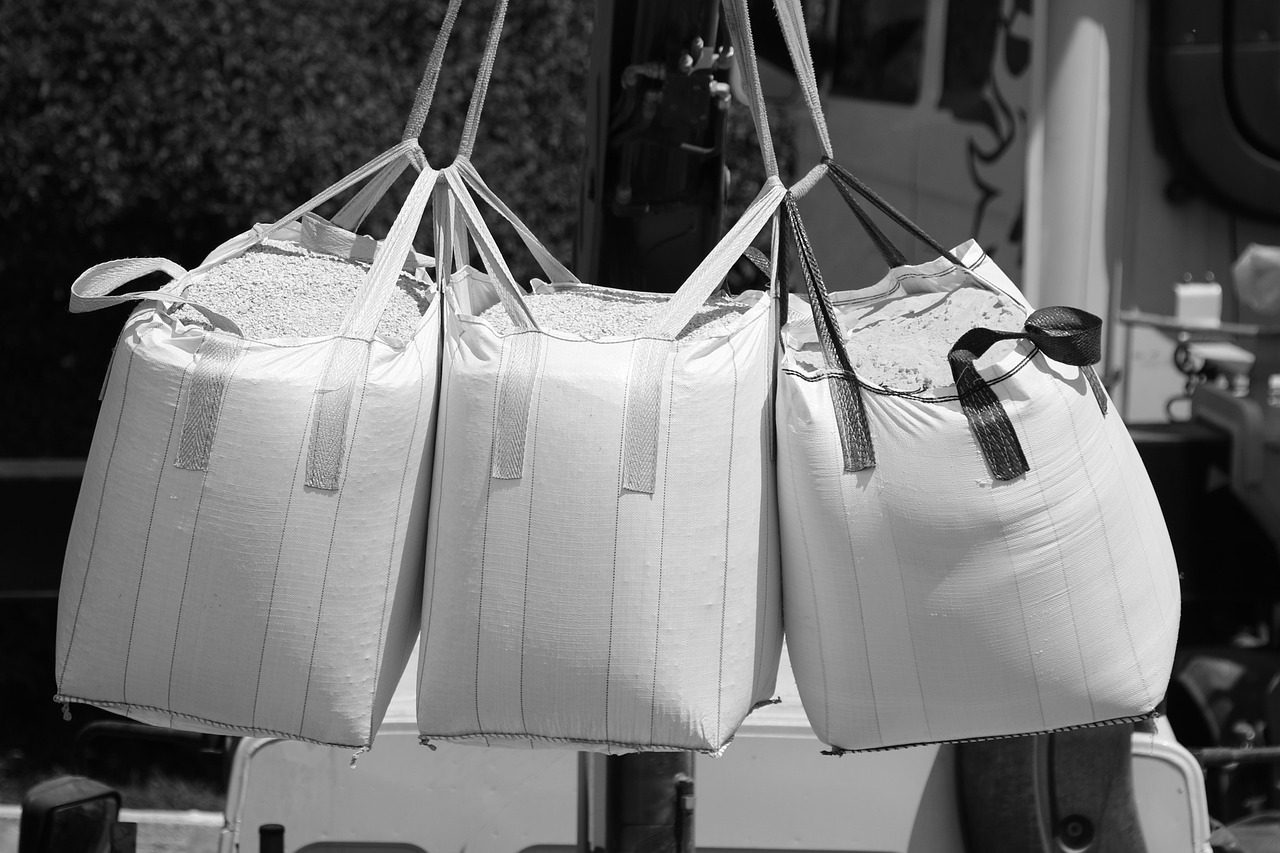
FIBCs, also called bulk bags or big bags, are used because they can move large quantities of dry, flowable materials with less packaging weight than many rigid alternatives. They are common in chemicals, minerals, agriculture, construction materials, plastics, food ingredients, and waste handling. That flexibility is useful, but it also makes specification discipline important.
A bulk bag is a load-bearing package. The woven fabric, lifting loops, sewing pattern, seams, liner, coating, label, and discharge features all affect performance. A change in resin, fabric weight, loop geometry, stitching quality, or liner fit can change the risk profile even when the finished bag looks similar. Buyers should therefore treat FIBC sourcing as a controlled packaging qualification process, not a simple commodity purchase.
Published industry guidance makes the same point from a handling perspective. FIBCA’s safe handling guidance is presented as general do’s and don’ts, and it specifically directs users to consult the FIBC supplier for advice on the specific application and handling environment. (fibca.com)
Core manufacturer capabilities to check
Design engineering, not only sewing capacity
A qualified manufacturer should be able to explain why a bag design fits the product and handling method. Useful questions include: What safe working load is proposed? Is the design single-trip, standard-duty reusable, or heavy-duty reusable? What top-lift test evidence is available? How will the bag behave during filling, vibration, stacking, and discharge? If the supplier cannot connect design choices to handling risks, a low quote may carry hidden cost.
Material control and traceability
Most FIBCs use woven polypropylene fabric, often with coatings, liners, UV additives, antistatic features, or colorants depending on the application. The manufacturer should be able to document raw material control, batch traceability, incoming inspection, fabric testing, loop strength, and finished bag checks. Traceability is especially important when the bag is used for regulated, high-value, food-contact, or export products.
Sewing, loop, and seam consistency
Many visible FIBC defects appear around lift loops, cross-corner seams, discharge spouts, and closure systems. Buyers should ask how the manufacturer controls stitch density, needle condition, thread specification, operator training, seam inspection, and nonconforming product. An acceptable sample is not enough. The real question is whether the factory can repeat the same construction across production lots.
Documentation discipline
Documentation should be treated as part of the product. Depending on the application, useful documents may include technical drawings, specification sheets, certificates of conformity, test reports, material declarations, food-contact statements, migration or resin compliance documents, static-control test references, and packing lists that match lot codes. The more sensitive the product, the more important it is to review documents before the first shipment leaves the factory.
Standards and safety checks that matter
For non-dangerous goods, ISO 21898:2024 provides a recognized technical framework for FIBC materials, construction, design, type testing, and marking. Buyers should confirm whether the quoted product is designed and tested against the current standard or another relevant national or customer specification. A vague statement such as “standard quality” is not a substitute for a named requirement and supporting test evidence. (standards.iteh.ai)
For hazardous materials or dangerous goods, the evaluation changes. Buyers should not assume that an ordinary industrial FIBC is suitable simply because it has the right capacity. In the United States, PHMSA guidance on hazardous materials packaging emphasizes design qualification testing for a new or different IBC design type under the applicable hazardous materials regulations. The sourcing implication is straightforward: if the contents are regulated, qualified compliance personnel should review the packaging specification before purchase. (phmsa.dot.gov)
Handling safety also depends on user practices after the bags arrive. The IMCA safety flash published on July 6, 2020 described a 900 kg load falling after an FIBC handle and stitching tore during a lift. Its recommended actions included inspecting bags before use, checking for damage and UV degradation, following supplier instructions, avoiding shock loading, and never lifting over personnel. (imca-int.com)
Manufacturers can reduce risk through design and testing, but they cannot compensate for poor storage, forklift damage, sharp lifting devices, excessive UV exposure, improper reuse, or handling outside the rated load. A reliable supplier will make this boundary clear.
Static-control and liner decisions
Electrostatic risk is one of the main reasons to avoid buying FIBCs by price alone. Powders, granules, and liners can generate static during filling and discharge. If combustible dust, flammable vapors, or sensitive powders are involved, the manufacturer needs enough application detail to recommend the correct FIBC type and liner combination.
| FIBC type | General purpose | Buyer caution |
|---|---|---|
| Type A | No built-in static protection | Not suitable where electrostatic ignition risk is present |
| Type B | Uses fabric with low breakdown voltage | Does not safely dissipate charge like Type C or Type D |
| Type C | Conductive design intended to be grounded | Grounding must be present and maintained during use |
| Type D | Static-dissipative design that does not require grounding | Surface contamination or incompatible liners can affect suitability |
FIBCA’s published guidance distinguishes these static-protective types and notes, for example, that Type C bags must be electrically grounded during filling and emptying, while Type D bags are designed not to require grounding. It also warns that liner combinations and contamination conditions matter. (fibca.com)
For buyers, the key point is to avoid using “antistatic bags” as a generic purchasing term. Instead, specify the powder, minimum ignition energy if known, filling rate, liner type, surrounding atmosphere, and grounding practices. The manufacturer’s recommendation should be documented and reviewed by the plant’s safety or process engineering team.
Food-grade and regulated applications
Food, feed, pharmaceutical, and high-purity chemical applications require additional controls beyond load strength. Buyers should evaluate hygiene zoning, pest control, foreign material prevention, metal detection where applicable, personnel hygiene, cleaning practices, air handling, lot traceability, and packaging of finished bags before shipment. See also: Box Design.
One common misunderstanding is the phrase “FDA-approved bulk bag.” FIBCA’s food safety guidance states that the U.S. FDA does not issue approvals or certifications for FIBCs or FIBC liners. Instead, the relevant question is whether the materials and manufacturing controls are appropriate for the intended food-contact use. FIBCA also notes that polypropylene resin used in many FIBC fabrics is addressed under FDA food-contact regulations when it meets the applicable requirements. (fibca.com)
Third-party packaging safety schemes may also be relevant. BRCGS describes its Packaging Materials standard as a program for manufacturers, producers, and suppliers to demonstrate that packaging products are quality assured, legally compliant, and made to support product safety and consumer protection. (brcgs.com)
In practical sourcing terms, buyers should not rely on a food-grade label alone. Ask for the exact site certification, scope, grade, audit date, excluded activities, material declarations, and procedures for preventing contamination during cutting, sewing, inspection, compression, and packing.
A practical evaluation matrix for shortlisting manufacturers
The following checklist can help buyers compare manufacturers consistently. It is not a ranking system; it is a way to identify risk before commercial negotiation.
- Application fit: The manufacturer collects data on product density, flowability, moisture sensitivity, discharge behavior, and filling equipment.
- Standards alignment: The quote identifies the standard or customer specification used for design and testing.
- Test evidence: Reports are linked to the same design, capacity, fabric, loop style, and construction being quoted.
- Static-control competence: The supplier distinguishes Type A, B, C, and D requirements and asks about liners and explosive atmosphere risks.
- Food or hygiene controls: The factory provides site-level certification or documented hygiene controls when food-contact use is claimed.
- Change control: Resin, fabric, liner, thread, printing ink, supplier, and construction changes are controlled and communicated.
- Lot traceability: Finished bags can be traced back to production and material lots.
- Export readiness: Labels, palletization, compression, fumigation status where relevant, and documents match the destination market.
- Complaint handling: The manufacturer has a documented corrective action process for failures, shortages, contamination, or documentation errors.
- Commercial resilience: Lead times, contingency capacity, raw material exposure, and shipping routes are discussed transparently.
A strong manufacturer will welcome detailed questions because clear specifications reduce disputes. A weak manufacturer may push buyers toward a standard bag even when the application requires a more controlled design.
Common sourcing mistakes to avoid
The first mistake is comparing prices without normalizing specifications. Two FIBCs may have the same dimensions and safe working load but differ in fabric weight, coating, loop construction, liner thickness, spout design, UV stabilization, printing, hygiene level, and testing history. The lower price may reflect a real efficiency, or it may reflect a missing requirement.
The second mistake is approving a sample without reviewing production controls. A sample can be made carefully by an experienced operator. Production orders depend on repeatable systems: documented specifications, trained workers, inspection gates, calibrated tests, and disciplined packing.
The third mistake is treating static control, food-contact suitability, and dangerous goods compliance as afterthoughts. These topics should be settled before the purchase order. Retrofitting compliance after production is often impossible.
The fourth mistake is over-concentrating supply. If FIBCs are critical to plant output, buyers should consider qualifying more than one manufacturer or at least more than one production site. This is an editorial risk-management view rather than a universal rule; the right approach depends on volume, product risk, storage capacity, and switching cost.
Frequently asked questions
Are FIBCs and bulk bags the same thing?
In most industrial purchasing conversations, yes. FIBC is the technical term for flexible intermediate bulk container, while bulk bag, big bag, jumbo bag, and builder’s bag are common commercial names. The exact design and compliance requirements depend on the application.
What documents should a buyer request from an FIBC manufacturer?
At minimum, request a technical drawing, full specification sheet, safe working load, design type, material and liner details, test evidence, marking details, and certificate of conformity. For food, static-control, or regulated contents, request additional documentation specific to that risk.
Can a manufacturer claim that an FIBC is FDA approved?
Buyers should be careful with that wording. FIBCA guidance states that the FDA does not approve or certify FIBCs or FIBC liners. A better request is for material compliance documentation and evidence that the manufacturing process is suitable for the intended food-contact application.
When should a buyer consider Type C or Type D FIBCs?
Type C or Type D may be considered when electrostatic discharge could create an ignition or safety risk, such as with flammable powders, combustible dust, or flammable vapors in the handling area. The final decision should be made with supplier input and safety engineering review.
Is the lowest-price FIBC manufacturer always risky?
Not always. Efficient producers can offer competitive prices. The risk appears when the price is lower because the specification, testing, material control, hygiene level, or documentation scope is incomplete. Buyers should compare total qualified cost, not just unit price.