Sustainability of food packaging means balancing protection, waste and circularity
a[data-rs-seo-link]{text-decoration:underline!important;color:#1a56db!important;cursor:pointer!important;}a[data-rs-seo-link]{text-decoration:underline!important;color:#1a56db!important;cursor:pointer!important;}
What sustainability of food packaging really means
The sustainability of food packaging should be judged by function, not by a single material label. A pack that uses fewer resources but allows more food spoilage can create a higher total impact than a slightly heavier pack that protects the product properly. A credible assessment starts with three questions: does the packaging keep food safe and usable, does it avoid unnecessary material, and can it be reused, recycled or composted in the market where it is sold? In 2026, this practical definition matters more than ever as regulators, retailers and consumers move away from vague green claims and toward evidence-based packaging design.
For packaging teams, the question is no longer whether a material sounds sustainable. It is whether the whole packaging system performs sustainably. That includes sourcing, converting, filling, transport, shelf life, consumer use, collection, sorting and end-of-life treatment. It also means recognizing a hard constraint in food packaging: food-contact safety requirements come before any circularity claim. More industry analysis on packaging and environmental trends can be found in the Sustainability section.
Why food packaging is different from ordinary packaging
Food packaging is often criticized because it is visible, frequently single use and closely linked to plastic waste. Those concerns are valid, but food packaging also performs environmental work that is less visible. It protects food from moisture, oxygen, light, physical damage, microbial contamination and tampering. For perishable products, packaging can influence whether food survives distribution and remains safe until consumption.
This matters because the environmental footprint of food is usually much larger than the footprint of the package around it. The Food and Agriculture Organization reported in November 2024 that global agrifood systems emissions reached 16.2 billion tonnes of carbon dioxide equivalent in 2022, with agrifood systems accounting for about one-third of total anthropogenic greenhouse gas emissions. Packaging is one part of that system, alongside agriculture, land use, processing, refrigeration, retail and waste.
The point is not that packaging impact should be ignored. It is that packaging reduction has to be balanced with food waste prevention. A thinner film, lighter tray or simplified carton is beneficial only if it preserves product quality and safety. If downgauging increases damage, leakage or spoilage, the apparent material saving may be offset by wasted food, replacement production and additional logistics.
The main sustainability levers for food packaging
Most credible strategies for improving food packaging sustainability use several levers rather than relying on one solution. A practical hierarchy starts with avoiding unnecessary packaging, then optimizing material use, designing for reuse or recovery, and improving collection and processing systems.
| Decision area | What to ask | Why it matters |
|---|---|---|
| Source reduction | Can weight, headspace, layers or secondary packaging be reduced without harming performance? | Prevents waste before it exists and often reduces cost and transport emissions. |
| Food protection | Does the package maintain safety, shelf life and product quality through the real supply chain? | Prevents the larger impact of food loss and product returns. |
| Material choice | Is the material appropriate for barrier needs, filling conditions and disposal infrastructure? | A recyclable material in theory may fail if it is not collected or sorted locally. |
| Design for recovery | Can consumers, material recovery facilities or composters identify and process it correctly? | End-of-life outcomes depend on design details, not broad claims. |
| Claim substantiation | Can recyclable, compostable, recycled content or biobased claims be proven? | Unsupported environmental claims create regulatory and reputational risk. |
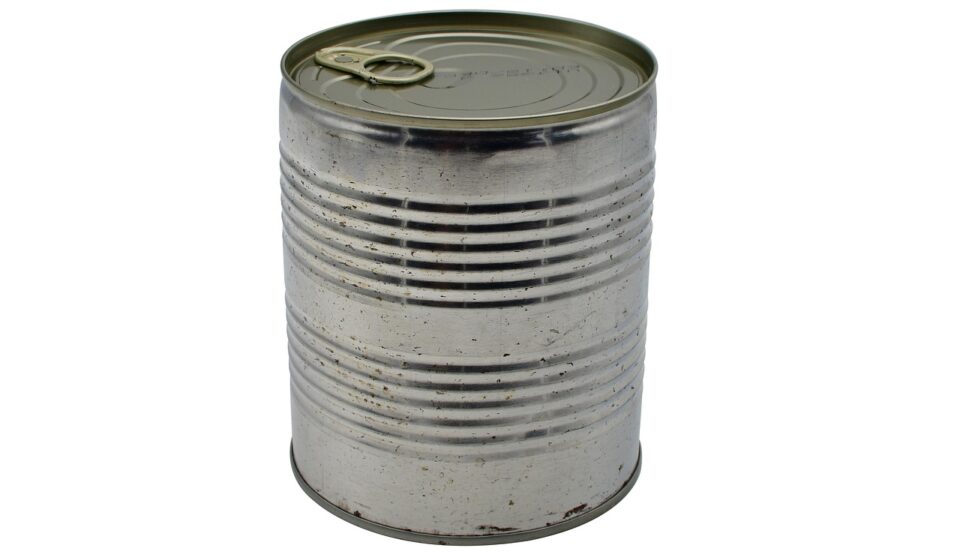
In practice, the most sustainable package may be a mono-material plastic pouch for one product, a fiber-based carton for another, a refillable container for a closed-loop foodservice system, or a metal can for shelf-stable food. The right answer depends on the product, route to market and recovery system.
Recyclability, compostability and reuse are not interchangeable
Recyclability is valuable when a package is collected, sorted and reprocessed into useful material at meaningful scale. It is much weaker when a package is technically recyclable but rarely accepted by local systems. U.S. Federal Trade Commission Green Guides say marketers should qualify recyclable claims when appropriate recycling facilities are not available to at least 60% of consumers or communities where the product is sold. That principle is especially relevant for food packaging because residues, multilayer structures, dark pigments, labels and small formats can complicate sorting and reprocessing.
Compostability is also often misunderstood. Compostable packaging does not mean the package will disappear in a landfill, the ocean or a backyard pile. Standards such as ASTM D6400 address plastics and products designed for municipal or industrial aerobic composting facilities and establish requirements for labeling them as compostable in those settings. If local composters do not accept compostable packaging, or if consumers place it in recycling streams, the intended benefit may not be realized.
Reuse can deliver significant benefits, but only when the system is designed well. Durable containers require more material at the start, and they may need washing, reverse logistics and tracking. Reuse is most promising where return rates are high, transport distances are manageable, containers are standardized and cleaning is efficient. In food packaging, reuse also has to satisfy hygiene controls and avoid cross-contamination.
A practical rule is to match the recovery pathway to the product and market. Compostable packaging may make sense for food-soiled items that are collected with organics. Recyclable packaging may be stronger for clean, widely collected formats such as certain bottles, jars, cans and paperboard. Reuse may be best for controlled settings such as foodservice, transport packaging and refill models where packaging returns can be measured.
Regulation is pushing packaging from claims to proof
The regulatory direction is clear: sustainability claims and packaging designs are being tied to measurable requirements. In the European Union, Regulation (EU) 2025/40 on packaging and packaging waste entered into force on February 11, 2025 and began applying from August 12, 2026 on a phased basis. The regulation introduces requirements related to recyclability, recycled content, minimization, reuse, labeling and waste prevention. Some key obligations phase in toward 2030 and beyond, giving businesses time to adapt while creating a more demanding compliance roadmap.
For food packaging, the critical point is that circularity cannot override food-contact safety. EU guidance on the regulation recognizes that recycled content obligations may need specific exemptions for plastic packaging intended to contact food when the quantity of recycled content would pose a health risk or conflict with food-contact rules. In the United States, FDA guidance on recycled plastics in food packaging highlights chemical contamination and potential migration into food as major considerations when evaluating recycled plastic for food-contact applications.
Packaging waste data adds to the pressure on the industry. The U.S. Environmental Protection Agency reported that containers and packaging accounted for 82.2 million tons of municipal solid waste generation in 2018, or 28.1% of total generation. Plastic containers and packaging represented 14.5 million tons in that dataset, with an overall recycling rate of 13.6%. These figures do not describe every food package specifically, but they show why packaging remains a major target for waste policy.
Policy is also moving beyond recycling alone. UNEP’s 2023 roadmap on plastic pollution emphasized elimination of problematic and unnecessary plastics, reuse, recycling, and careful substitution as combined strategies. That systems view is important for food packaging because no single end-of-life route can solve all packaging impacts. See also: Box Design.
How to assess a food package before calling it sustainable
A credible packaging review should be specific enough to show the trade-offs. Start with the food. Is it dry, wet, acidic, fatty, frozen, hot-filled, fresh, oxygen-sensitive or ready-to-eat? Each product type requires different barriers and safety controls. Then map the supply chain. A package that works for local chilled delivery may fail in long-distance ambient distribution.
Next, define the baseline. Claims such as lighter, lower carbon or less waste are meaningful only when compared with a previous package or a clear alternative. The baseline should include package weight, product loss, pallet efficiency, transport mode, storage temperature and end-of-life assumptions. If a life cycle assessment is used, its boundaries should be clear and should not ignore food waste effects.
Then test circularity in the real market. A package may be technically recyclable but still fail because of adhesives, coatings, multilayer construction, small size or food residue. A compostable pack may meet a standard but lack access to facilities that accept it. A reusable pack may underperform if return rates are low. These are not reasons to reject innovation; they are reasons to measure it honestly.
Finally, review claims before launch. Avoid broad phrases such as eco-friendly, green or biodegradable without context. Stronger claims are specific: made with a stated percentage of recycled content, designed for a named recycling stream, certified for industrial composting, or reduced in weight compared with a defined previous package. Specificity makes claims easier to understand and easier to substantiate.
What better packaging decisions look like
Better decisions often start with small design changes. Removing unnecessary layers, reducing empty space, improving disposal labeling, adding resealability where it reduces waste, or standardizing materials can produce measurable improvements without risking product safety. In some cases, a mono-material structure may improve recyclability. In others, a high-barrier multilayer pack may still be justified if it prevents significant food waste.
Food brands and packaging suppliers should separate material preference from system performance. Paper-based packaging may reduce fossil plastic use, but coatings, wet-strength additives or food contamination can affect recyclability. Biobased plastics may reduce reliance on fossil feedstocks, but they still need appropriate recovery pathways. Recycled content can reduce virgin material demand, but food-contact applications require safety evaluation and reliable supply quality.
The most practical sustainability roadmap usually includes four steps:
- Eliminate packaging features that do not improve protection, handling, information or consumer use.
- Optimize the remaining structure for product safety, shelf life and material efficiency.
- Design for the most realistic end-of-life route in the target market.
- Use precise, substantiated claims that reflect actual consumer access and infrastructure.
This approach is less dramatic than a headline material swap, but it is more reliable. The sustainability of food packaging improves when teams reduce unnecessary impact while preserving the package’s core job: delivering safe, usable food with the lowest practical total burden.
Frequently asked questions
Is plastic food packaging always less sustainable than paper?
No. Plastic can be problematic when it is unnecessary, hard to recycle or likely to leak into the environment. However, some plastic formats provide strong barriers with very low weight and can reduce food spoilage. Paper can be a good option in many applications, but coatings, contamination and performance limits must be considered. The better choice depends on the food, supply chain and recovery system.
Is compostable packaging a good solution for food waste?
It can be useful when packaging is likely to be food-soiled and collected with organics by facilities that accept compostable packaging. It is not a universal replacement for recycling or reduction. Compostable claims should identify the conditions required, such as industrial composting, and should not imply that the package will break down in every environment.
What is the biggest mistake in sustainable food packaging decisions?
The biggest mistake is evaluating the package alone while ignoring the food it protects. A lower-impact material choice can become a higher-impact system if it increases spoilage, damage or safety risk. Sustainable food packaging decisions should compare total outcomes, including product loss and end-of-life reality.
How should companies communicate packaging sustainability?
Companies should use specific, verifiable claims. Instead of broad green language, they should state the material change, percentage reduction, recycled content level, certification basis or recovery pathway. Clear instructions for disposal or return also help consumers act correctly and reduce contamination in recycling or composting streams.