How a blister pack protects products from shelf to use
a[data-rs-seo-link]{text-decoration:underline!important;color:#1a56db!important;cursor:pointer!important;}a[data-rs-seo-link]{text-decoration:underline!important;color:#1a56db!important;cursor:pointer!important;}
What a blister pack does for product protection
A blister pack is a pre-formed packaging format that holds a product in a shaped cavity, usually sealed to a paperboard card, foil, film, or another backing. Its value is not limited to product visibility. A well-designed blister pack can restrict product movement, reduce handling damage, show evidence of opening, separate individual units, and provide space for instructions, branding, barcodes, and compliance information.
The key point is that the blister is a packaging system. Cavity geometry, plastic or foil material, backing substrate, coating, seal pattern, opening method, and testing all affect how well the finished pack protects the product.

For product teams comparing packaging options, blister packaging is usually strongest when the product is small, display-ready, and needs controlled access. It is less suitable for bulky, highly irregular, very heavy, or impact-sensitive items that are better served by cushioning, cartons, molded pulp, or reusable transport packaging. For related packaging formats and protection topics, see the Product Protection section.
How blister packaging works
Most blister packs start with a forming web: a sheet or film is heated and shaped over a mold to create one or more cavities. The product is loaded into the cavity, and a backing material is then sealed to the blister. In consumer retail packaging, that backing is often a printed card. In pharmaceutical packaging, it is commonly aluminum lidding foil or a specialty laminate. In some medical device applications, the backing may be a porous or non-porous sterile barrier material, depending on the sterilization method and device requirements.
The package protects the product in several connected ways:
- Physical retention: The formed cavity keeps the item from sliding, rubbing, or colliding with other items during handling.
- Visibility: Clear plastic allows shoppers, inspectors, or users to see the product without opening the package.
- Tamper evidence: The pack can be designed so that opening requires tearing, breaking, peeling, or puncturing a component.
- Unit separation: Multi-cavity blister packs can isolate each dose, part, battery, blade, or accessory.
- Communication: The card or lidding area can carry warnings, instructions, lot information, expiration dating, and brand messaging.
The package only performs as intended when forming, loading, sealing, trimming, and inspection are controlled. A strong material cannot compensate for a weak seal. Likewise, a strong seal can still fail if the card warps, the coating is incompatible, or the cavity leaves too much headspace for the product to move.
Main blister pack formats and where they fit
Blister packaging is not a single structure. The term can refer to several formats with different protection levels, opening experiences, and equipment requirements.
| Format | Typical structure | Common use | Protection trade-off |
|---|---|---|---|
| Face-seal blister | A formed plastic blister sealed to the front of a coated card | Small retail goods, accessories, hardware, toys | Good visibility and low material use, but the seal area must be designed to resist peeling and card fiber tear issues |
| Full-card blister | Plastic covers most or all of the front card surface | Retail items that need more display impact or broader protection | More plastic and stronger shelf presence, but recycling may be harder if materials are not separated |
| Trapped blister | The blister flange is captured between front and back cards | Products needing cleaner edges and better theft resistance | Improved tamper evidence and appearance, with added card material and converting complexity |
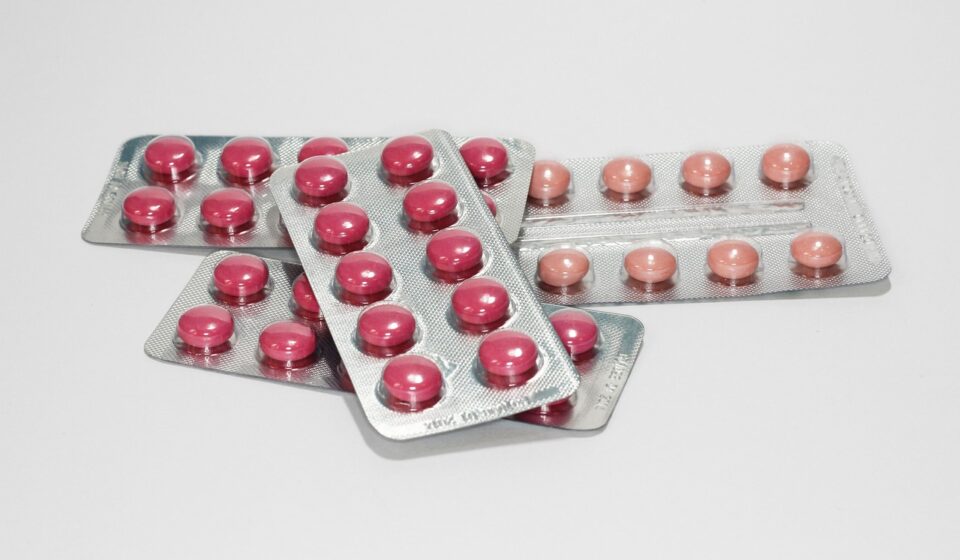
| Pharmaceutical push-through blister | Formed cavities sealed with lidding foil | Tablets, capsules, lozenges, and other solid oral doses | Excellent unit-dose control, but material choice must match moisture, oxygen, and light sensitivity |
| Cold-form foil blister | Aluminum-based laminate mechanically formed without heat forming | Moisture- or light-sensitive drugs | High barrier protection, but opaque appearance, larger footprint, and slower forming compared with many thermoformed structures |
Skin packaging is often confused with blister packaging. In a skin pack, the film is drawn tightly over the product and sealed to a backing. A blister, by contrast, uses a cavity formed before product loading. That distinction matters because the cavity can be engineered for clearance, retention, and product presentation rather than simply conforming to the item.
Material choices affect clarity, barrier, cost, and recyclability
Common materials used in blister packaging include PVC, PET, rPET, PETG, PP, HIPS, aluminum foil, and multi-layer barrier laminates. Each material has practical strengths and limits. Clear rigid plastics are widely used in retail because they show the product and thermoform efficiently. Aluminum and specialty barrier films are important in pharmaceutical and healthcare packaging when moisture, oxygen, or light protection is part of product stability.
PVC has historically been widely used because it forms and seals well, but it can raise recyclability and material policy questions in some markets. PET and rPET are often considered when clarity, stiffness, and compatibility with existing recycling streams are priorities. PETG can offer forming and impact advantages, but its compatibility with local recycling systems should be checked because acceptance varies by region and material stream. PP may support certain recyclability goals, although it can require different forming and sealing conditions. Aluminum-based cold-form blisters provide strong barrier performance, but they remove product visibility and can complicate sorting when combined with other layers.
For pharmaceutical packaging, flat film data is only the starting point. The finished blister must be evaluated as a closed package because forming depth, corner thinning, seal quality, lidding material, and storage conditions affect real barrier performance. ASTM D7709 is one recognized test method for measuring water vapor transmission rate in pharmaceutical bottles and blisters, with blister results expressed by cavity rather than only by sheet area. That distinction is useful because a deep or sharply formed cavity may perform differently from the unformed film specification.
Tamper evidence and child resistance are not the same
Blister packaging is often selected because it can make opening visible. However, tamper evidence and child resistance are separate concepts. A tamper-evident blister should show visible evidence if someone opens or interferes with the package. A child-resistant package is designed and tested to make access difficult for young children while still being usable by adults within defined test requirements.
U.S. Food and Drug Administration guidance for certain over-the-counter human drug products recognizes blister and strip packs as examples of tamper-resistant packaging technologies when dosage units are individually sealed and the backing cannot be separated or replaced without visible evidence of entry. The same FDA guidance also warns that using a listed technology by itself does not automatically prove compliance; the feature must be properly designed and applied.
For child-resistant packaging, U.S. requirements under the Poison Prevention Packaging Act are implemented through Consumer Product Safety Commission regulations. In 16 CFR 1700.15, special packaging must meet specified child-resistant effectiveness and adult-use effectiveness criteria. FDA guidance on child-resistant packaging statements also notes that child-resistant should not be read as child-proof. In practical terms, peel-push blisters, puncture-resistant lidding, and other access controls must be validated against the applicable product and regulatory context rather than assumed from appearance.
Design details that decide whether a blister pack performs
Many blister failures come from small design decisions rather than from the general format. The following variables should be reviewed before a production design is approved.
Cavity geometry
The cavity should hold the product without crushing it and without allowing excessive movement. Deep draws, sharp corners, and narrow bridges can thin the plastic during forming. If the product has fragile edges, coatings, bristles, blades, electrical contacts, or decorative surfaces, the cavity may need support ribs, clearance zones, or a shaped insert. See also: Box Design.
Seal area and backing compatibility
The seal is often the most important protection feature. Heat, dwell time, pressure, coating chemistry, and card flatness must work together. A wide seal is not automatically better if the coated board delaminates or curls. For retail cards, the coating should match the plastic material and the intended sealing process. For foil lidding, seal lacquer, pinhole control, and peel or push-through force are central to both user experience and barrier protection.
Opening method
Easy-open design can reduce consumer frustration, but it may also reduce theft resistance or child resistance if not controlled. Tear notches, perforations, peel tabs, and scored cards should be tested with real users where access matters. For products with safety risks, the opening method should follow the applicable regulatory standard rather than a general packaging preference.
Labeling and inspection space
Blister packaging can carry instructions and warnings, but the card or lidding area must remain readable after forming, sealing, hanging, and shelf handling. Lot codes, expiration dates, dosage instructions, and barcodes should not be placed where heat, curvature, glare, or product shadow will make them difficult to inspect.
Sustainability pressure is changing blister pack decisions
The sustainability discussion around blister packaging has moved beyond simple material reduction. Design for recycling, material separation, recycled content, and regional compliance now influence material and format choices. The European Union Packaging and Packaging Waste Regulation, Regulation (EU) 2025/40, began applying in August 2026 and sets a long-term direction toward recyclable packaging, with design-for-recycling criteria linked to 2030 and recycled-at-scale expectations linked to 2035. The European Commission has also stated that plastic packaging will need recycled content under defined conditions, with exemptions and sector-specific rules in some areas.
These developments do not mean every blister pack must use the same material. They do mean that mixed-material structures, dark colors, incompatible coatings, oversized cards, and difficult-to-separate components will face closer scrutiny. In healthcare packaging, the calculation can be more complex because patient safety, sterility, stability, and regulatory approval may outweigh a simple material substitution. The Healthcare Plastics Recycling Council has noted that healthcare facilities generate large amounts of clean, non-infectious plastic waste, but collection and sorting systems remain critical to whether that material can actually be recycled.
A practical sustainability review should start with four questions. Can the package be made smaller without increasing damage or misuse? Can the main material be accepted by the target market’s recycling infrastructure? Can paperboard and plastic be separated by the user or recycling system? Can the design avoid unnecessary laminates, coatings, inks, and adhesives that reduce recyclability? The answer may differ between a retail accessory blister, a medical device tray, and a prescription drug blister.
A practical checklist before choosing blister packaging
Before committing to a blister pack, product teams should document the protection requirement rather than starting with a preferred material. The following checklist keeps the decision grounded:
- What failure must the package prevent: breakage, moisture gain, theft, contamination, product loss, misdosing, or visual damage?
- Does the product need visibility, or would an opaque high-barrier structure perform better?
- Is the blister a primary package, a retail display package, or secondary protection around another container?
- What regulations apply in each market, especially for drugs, medical devices, batteries, sharps, chemicals, or child-resistant products?
- What barrier properties are required after forming and sealing, not only in the flat film data sheet?
- How will seal strength, burst resistance, leak integrity, aging, shipping, and user opening be tested?
- Can the package be recycled or separated in the markets where it will be sold?
- Does the design leave enough area for required labeling, codes, warnings, and multilingual instructions?
The right blister pack is not automatically the clearest, thickest, or most rigid option. It is the design that protects the product through distribution and use while meeting access, labeling, cost, production, and end-of-life requirements.
Frequently asked questions
What is the main advantage of a blister pack?
The main advantage is controlled product protection with visibility. A blister pack can hold a product in place, reduce handling damage, show evidence of opening, and support unit-by-unit access while still allowing the item to be seen.
Is blister packaging always recyclable?
No. Recyclability depends on the material, coatings, labels, adhesives, color, local collection systems, and whether the plastic, paperboard, and foil components can be separated or sorted. A mono-material or easily separable design is usually easier to evaluate than a complex laminate.
What is the difference between blister packaging and clamshell packaging?
A blister pack usually has a formed cavity sealed to a card, foil, or film. A clamshell is typically a hinged rigid plastic package that folds around the product. Clamshells can provide strong enclosure, while blister packs often use less plastic and provide more card space for information.
Can blister packs be child-resistant?
Some blister packs can be designed and tested as child-resistant, such as peel-push or puncture-resistant formats used for certain medicines. However, a blister appearance alone does not prove child resistance. The package must meet the applicable regulatory and test requirements for the product and market.
When should a company avoid blister packaging?
Blister packaging may be a poor fit for heavy, bulky, highly fragile, irregular, or premium products that need cushioning, reuse, or a different unboxing experience. It may also be unsuitable when the required barrier, recycling, or accessibility goals cannot be met with an available blister structure.