Ferrero packaging sustainability progress and what it means for food brands
a[data-rs-seo-link]{text-decoration:underline!important;color:#1a56db!important;cursor:pointer!important;}a[data-rs-seo-link]{text-decoration:underline!important;color:#1a56db!important;cursor:pointer!important;}
What Ferrero packaging sustainability means in 2026
Ferrero packaging sustainability is moving from broad recyclability commitments toward measurable circular packaging performance. As of October 2026, Ferrero’s latest public sustainability update is its 2025 Sustainability Report, published on June 30, 2026 and covering fiscal year 2024/25. The headline figures show progress, but also the limits of design-led change: Ferrero reported that 92.9% of its overall packaging was designed for recyclability, reusability or compostability, while 86.8% was recyclable, reusable or compostable in practice and at scale. That gap matters. It shows that packaging design is only one part of circularity. Collection, sorting infrastructure, food-contact rules, recycled material supply and consumer disposal behavior still determine whether a pack actually circulates after use. (ferrero.com)
For packaging teams, Ferrero’s current position is a useful case study. Progress is coming through material substitution, lightweighting, mono-material design and supplier partnerships. The more difficult phase is proving that redesigned packaging can be recovered in real markets, not only under technical assumptions. For more packaging and materials coverage, visit our Sustainability section.
The key numbers behind Ferrero’s packaging progress
Ferrero’s packaging goals have shifted from a 2018/19 objective of 100% recyclable, reusable or compostable packaging by 2025 toward maintaining more than 90% of packaging designed to be recyclable, reusable or compostable, while improving in-practice circularity. The distinction is important. “Designed to be recyclable” generally refers to technical design characteristics. “Recyclable in practice and at scale” depends on whether the package is commonly collected, sorted and recycled in the relevant markets. (ferrero.com)
| Metric | FY 2021/22 | FY 2022/23 | FY 2023/24 | FY 2024/25 |
|---|---|---|---|---|
| Packaging designed to be recyclable, reusable or compostable | 88.5% | 90.7% | 92.1% | 92.9% |
| Recyclable, reusable or compostable in practice and at scale | 83.2% | 84.8% | 86.1% | 86.8% |
| Recycled content in plastic packaging | 4.3% | 5.3% | 5.8% | Not stated in the 2025 press summary reviewed |
| Renewable materials in packaging | 40.2% | 40.5% | 40.9% | Reported as up 3.5% versus FY 2023/24 |
| Reduction in plastic-to-product ratio | -1% | -7% | -13% | -14.7% versus 2019/20 baseline |
Source note: FY 2021/22 to FY 2023/24 figures come from Ferrero’s 2024 Sustainability Report. FY 2024/25 figures come from Ferrero’s 2025 Sustainability Report announcement and packaging update. (ferrero.com)
The table highlights two trends. First, Ferrero has stayed above the 90% threshold for packaging designed to be recyclable, reusable or compostable since FY 2022/23. Second, the in-practice-and-at-scale figure is improving more slowly, rising from 83.2% to 86.8% over the period shown. That slower movement is typical of the constraints food packaging teams face, including high-barrier materials, flexible films, small-format packs and food-contact safety requirements.
Where Ferrero is changing packaging design
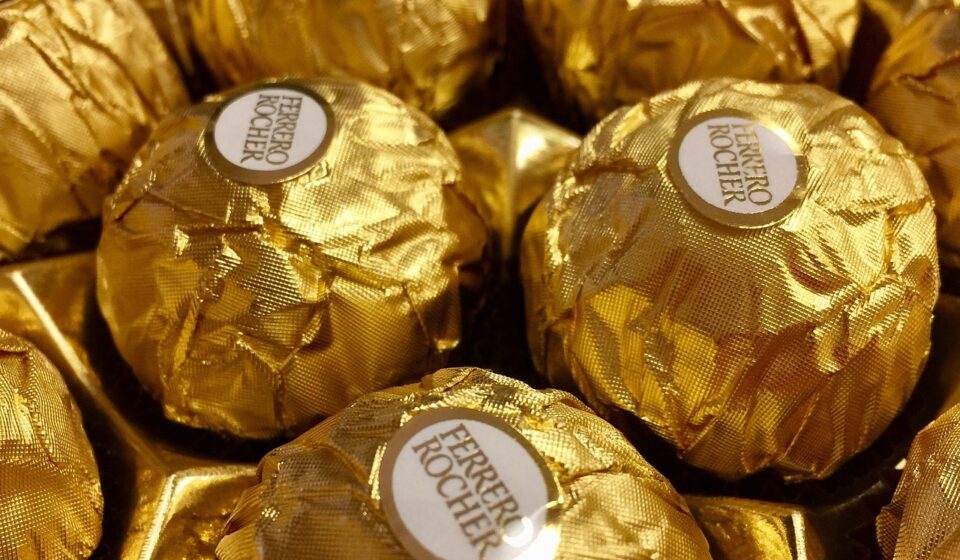
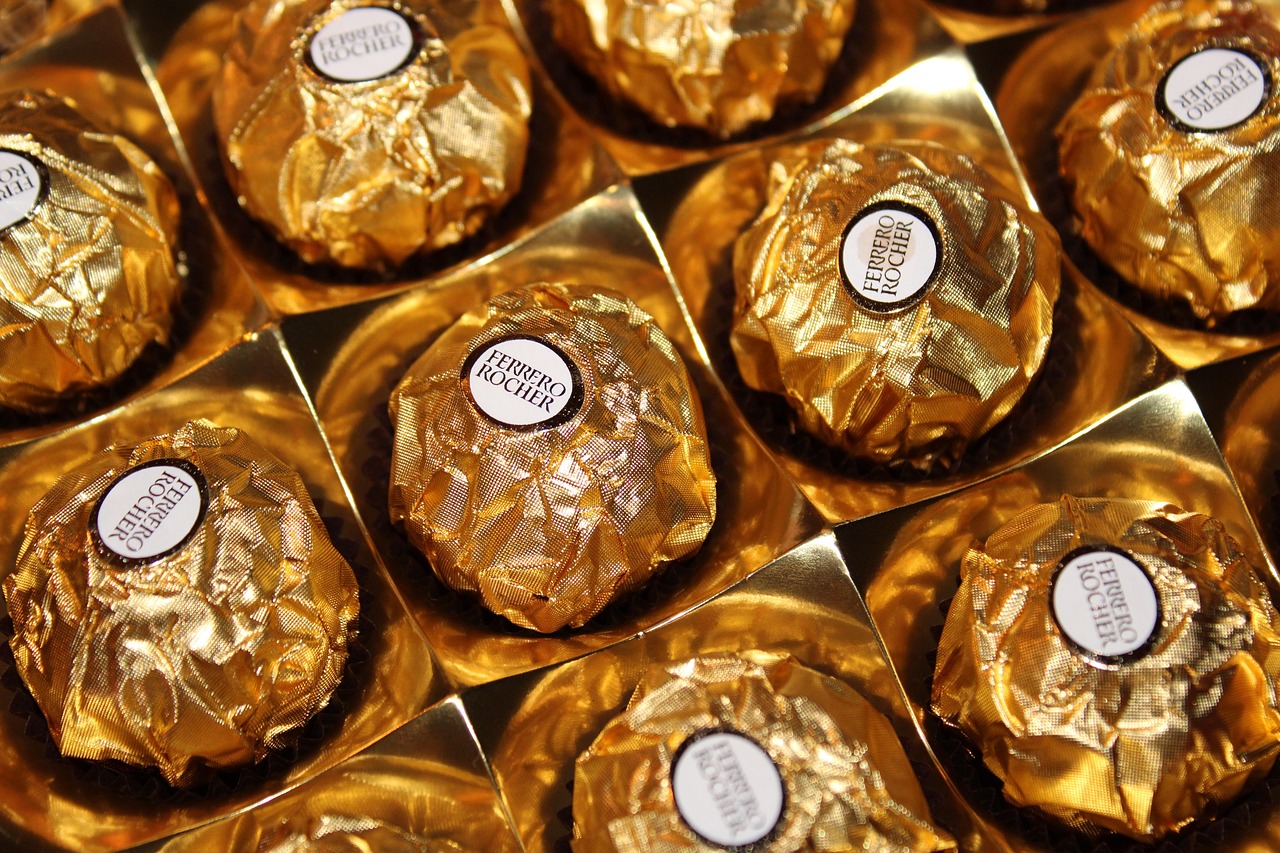
Ferrero’s most visible packaging changes are tied to specific product formats rather than abstract pledges. The clearest example is the Ferrero Rocher box redesign. Ferrero says the redesigned Rocher boxes use polypropylene, a material with broader recycling program availability than the previous box materials in many markets. Its packaging page says the global redesign helped reduce approximately 16,000 tonnes of plastic cumulatively between September 2021 and August 2025, and the 2025 Sustainability Report announcement links the redesign to a 14.7% reduction in plastic-to-product ratio versus the 2019/20 baseline. (ferrerorocher.com)
The Rocher redesign matters because it combines several packaging strategies at once. It changes the resin, reduces material weight, keeps the transparent presentation associated with the product and seeks better alignment with existing recycling streams. That is more practical than assuming a simple switch from plastic to paper will always improve sustainability. In food packaging, such switches can create trade-offs around product protection, barrier performance or food waste.
Ferrero also points to Kinder Joy’s paper spoon as an example of replacing plastic in a specific component. According to Ferrero’s packaging page, the company has replaced around 95% of plastic spoons in Kinder Joy eggs with paper spoons since 2022. This is smaller than a full pack redesign, but it shows how brands can reduce plastic use in high-volume accessories without changing the entire primary pack. (ferrero.com)
Why “designed for recycling” is not the same as real circularity
The main lesson from Ferrero’s packaging reporting is the difference between design intent and real-world circularity. A package can be technically recyclable but still fail to be recycled if consumers do not have access to collection, sorting equipment cannot identify the pack, the format is too small, the material is contaminated or there is no viable end market for the recovered material.
This is why the “in practice and at scale” metric is becoming more important. The Ellen MacArthur Foundation’s Global Commitment framework has emphasized that reusable, recyclable or compostable packaging claims should go beyond theoretical design and consider whether systems actually exist to reuse, recycle or compost a format at scale. Ferrero’s own reporting reflects that pressure by showing both the designed-for-recyclability number and the lower in-practice figure. (content.ellenmacarthurfoundation.org)
For food brands, this distinction helps prevent overclaiming. It is no longer enough to select a material that could be recycled under ideal conditions. Packaging teams need evidence that the format can move through local recovery systems, and that labels, inks, adhesives, lids, trays and flexible layers do not undermine recyclability. This is especially relevant for confectionery, biscuits, spreads and snacks, where packaging must protect freshness, prevent breakage, support shelf presentation and meet food-contact requirements.
How regulation is raising the bar
Ferrero’s packaging work is taking place in a regulatory environment that is becoming more demanding. In the European Union, new packaging rules began applying on August 12, 2026. The European Commission says the rules are designed to reduce packaging waste, require all packaging to be recyclable by 2030 and increase recycled content in plastic packaging. Regulation (EU) 2025/40 also points toward making packaging reusable or recyclable by 2030 and includes requirements related to recycled content and design for recycling. (commission.europa.eu) See also: Box Design.
For global food companies, this regulatory direction changes the business case for packaging redesign. Recyclability is becoming a market-access, compliance and reporting issue, not only a brand reputation issue. A company operating across Europe, North America, Asia and emerging markets must design packaging that can meet tightening rules while still working in countries with very different recycling infrastructure.
This is one reason Ferrero’s partnerships matter. Ferrero lists work with organizations and initiatives including the Ellen MacArthur Foundation, the Consumer Goods Forum, CEFLEX, RecyClass, 4evergreen, the Association of Plastics Recyclers and The Recycling Partnership. Those partnerships do not prove that every package is circular, but they show where the technical work is concentrated: recyclability guidelines, mono-material structures, sorting technology, labeling and market-level recovery systems. (ferrero.com)
What packaging teams can learn from Ferrero’s approach
Ferrero’s progress points to several practical lessons for brands, converters and packaging suppliers.
- Measure more than one metric. A single recyclability percentage can hide important gaps. Ferrero’s split between design recyclability and in-practice recyclability gives a clearer view of the remaining work.
- Prioritize high-volume formats. Redesigning Rocher boxes has a measurable material impact because the format is widely sold and plastic-intensive enough for lightweighting to matter.
- Avoid simple material assumptions. Paper is not always better and plastic is not always worse. The better option depends on weight, product protection, recycling access, emissions, food waste risk and end markets.
- Design for sorting, not just for shelves. Packaging must still communicate premium value and protect the product, but it also has to pass through recovery systems after use.
- Prepare for 2030 requirements now. The timeline for packaging redesign, equipment changes, supplier qualification and market rollout can be long, especially for food-contact packaging.
The takeaway is balanced. Ferrero has made measurable progress, especially in design recyclability and plastic reduction, but its own data shows that real circularity remains harder than design optimization. The next stage of Ferrero packaging sustainability will likely depend on recycled-content availability, local recycling infrastructure, food-contact approvals and whether redesigned formats can perform consistently across global markets.
Frequently asked questions
What is Ferrero’s current packaging sustainability goal?
Ferrero currently states commitments around maintaining more than 90% of packaging designed to be recyclable, reusable or compostable, reducing the plastic-to-product ratio versus its 2019/20 baseline and increasing recycled content in plastic packaging. In FY 2024/25, Ferrero reported 92.9% of overall packaging designed for recyclability, reusability or compostability. (ferrero.com)
Has Ferrero reached 100% recyclable packaging?
Based on the sources reviewed, Ferrero has not reported 100% real-world recyclable packaging. Its FY 2024/25 figure was 92.9% designed for recyclability, reusability or compostability, while 86.8% was recyclable, reusable or compostable in practice and at scale. That gap is central to understanding the challenge. (ferrero.com)
What is the main packaging change in Ferrero Rocher boxes?
Ferrero Rocher’s redesigned boxes use polypropylene and reduce plastic use across several gift box formats. Ferrero says the global Rocher box redesign avoided about 16,000 tonnes of plastic cumulatively between September 2021 and August 2025. (ferrerorocher.com)
Why is food packaging harder to make sustainable?
Food packaging has to protect product safety, freshness and quality while also meeting labeling, transport, shelf-life and food-contact requirements. These needs can limit material choices, especially where flexible barriers, transparent premium packs or small components are involved.
What should suppliers watch next?
Suppliers should watch recycled-content availability, design-for-recycling standards, sorting technology, EU 2030 recyclability requirements and brand-level demand for mono-material or lightweight packaging. Ferrero’s reporting shows that packaging innovation is moving from isolated material swaps toward system-level circularity.